To Our Listeners:
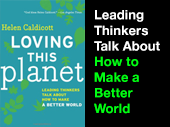
Welcome to If You Love This Planet Radio. We will occasionally feature new programs including my recent lectures and proceedings of conferences. Please enjoy our archive of nearly 200 interviews. The complete catalog of programs available for listening and downloading is on the Archives page. A book of 25 of my interviews called Loving This Planet may interest you. I am now concentrating on other new initiatives of The Helen Caldicott Foundation , including a two-day international symposium on the risk of nuclear war between the U.S. and Russia, to be held February 28-March 1 2015 at the New York Academy of Medicine. Watch this space for registration details on this important conference, The Dynamics of Possible Nuclear Extinction, which will be open to the public. And be sure to visit nuclearfreeplanet.org for news, reports and other resources related to the work of my foundation.
Helen Caldicott, M.D.
February 14th, 2024

Register to watch a 7:00 to 8:30 pm EST webinar on Zoom featuring remarks by Dr. Helen Caldicott and Martin Sheen. Dr. Caldicott will introduce the 1983 Academy Award-winning film “If You Love This Planet” about the effects of nuclear war, and discuss the present Ukraine and Gaza conflicts. President John F. Kennedy’s American University address on world peace will also be shown. Dr. Caldicott will answer questions from the Zoom audience.
Register here:
https://us06web.zoom.us/meeting/register/tZMlc-qrqTMoHtWKsHBFPpvEEpaTayxERpFE#/registration
Event sponsored by the JFK Peace Committee and the Community Church of Boston.
Posted in Uncategorized | No Comments »
April 17th, 2017
Clip 1B
Watch on YouTube
In this episode, we hear more presentations from the Dynamics of Possible Nuclear Extinction symposium held at the New York Academy of Medicine in New York City in February 2015. Some of the speeches include visuals which can be seen by watching the presentations in streaming format on the official conference hosting site. Since the conference, U.S. politicians and mainstream media have only amplified the reignited hatred of Russia, particularly president Vladimir Putin, and made nuclear war more likely. Read Demonization of Putin as “Personally” Behind Clinton Hack Is Old Propaganda Technique, Mikhail Gorbachev: Appears ‘The World Is Preparing for War’ and Thanks, Trump. Doomsday Clock Now Two and a Half Minutes to Midnight.
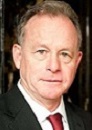
Steven Starr
First up is Steven Starr, Associate of Nuclear Age Peace Foundation, and Senior Scientist at Physicians for Social Responsibility. Hear Dr. Caldicott’s 2010 interview with Starr. Visit Starr’s website NuclearDarkness.org to learn more about the consequences of nuclear war, nuclear winter and how nuclear weapons explosions would irreparably harm the global climate. In Starr’s presentation, “Nuclear War: An Unrecognized Mass Extinction Event,” he explains how nuclear war would be the crime to end all crimes, and would mean the end of all human life on earth. Among the issues addressed are the phenomenon of nuclear winter, why political leaders by and large do not discuss nuclear war, and the lack of Read the rest of this entry »
Posted in Uncategorized | 1 Comment »
June 23rd, 2016
Clip 1A
Watch on YouTube
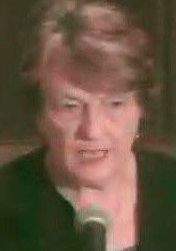
Dr. Caldicott addressing the symposium
In this program, we hear the first series of speakers at The Dynamics of Possible Nuclear Extinction, a two-day symposium organized by If You Love This Planet host Dr. Helen Caldicott at The New York Academy of Medicine last year. With the continuing revival of Cold War tensions between the U.S. and Russia, the presentations are still timely. Read the June 2016 article by Noam Chomsky, The Doomsday Clock: Nuclear Weapons, Climate Change and the Prospects for Survival, the May 2016 article U.S., NATO Look to Combat an Aggressive Russia, the April 2016 article Inevitability: Nuclear War is Coming and the February 2016 story Russia-NATO relations have fallen to new Cold War level – Russian PM. Some of the presentations include visuals which can be seen by watching the presentations in streaming format on the official conference hosting site.
In her introductory remarks, Dr. Caldicott tells the audience how her concern about accidental nuclear war was raised by reading a 2014 article on Read the rest of this entry »
Posted in Uncategorized | Comments Off
February 16th, 2015
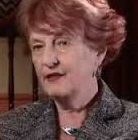
Dr. Helen Caldicott
TUC Radio recently aired
Dr. Caldicott’s October 2014 speech at the National Press Club in Washington, D.C. This special two-part If You Love This Planet feature, The Ukraine Crisis, Is Nuclear Conflict Likely?, comes courtesy of TUC.
Listen to Part One here and
listen to Part Two here. To hear other programs produced by TUC,
visit this page. Here is TUC Radio’s description of the program:
“On October 8, 2014, the life long antinuclear campaigner and author Helen Caldicott addressed the National Press Club Newsmakers in Washington, DC. She said Read the rest of this entry »
Posted in Uncategorized | Comments Off
December 28th, 2012
Listen Now Download the show by right-clicking the link.
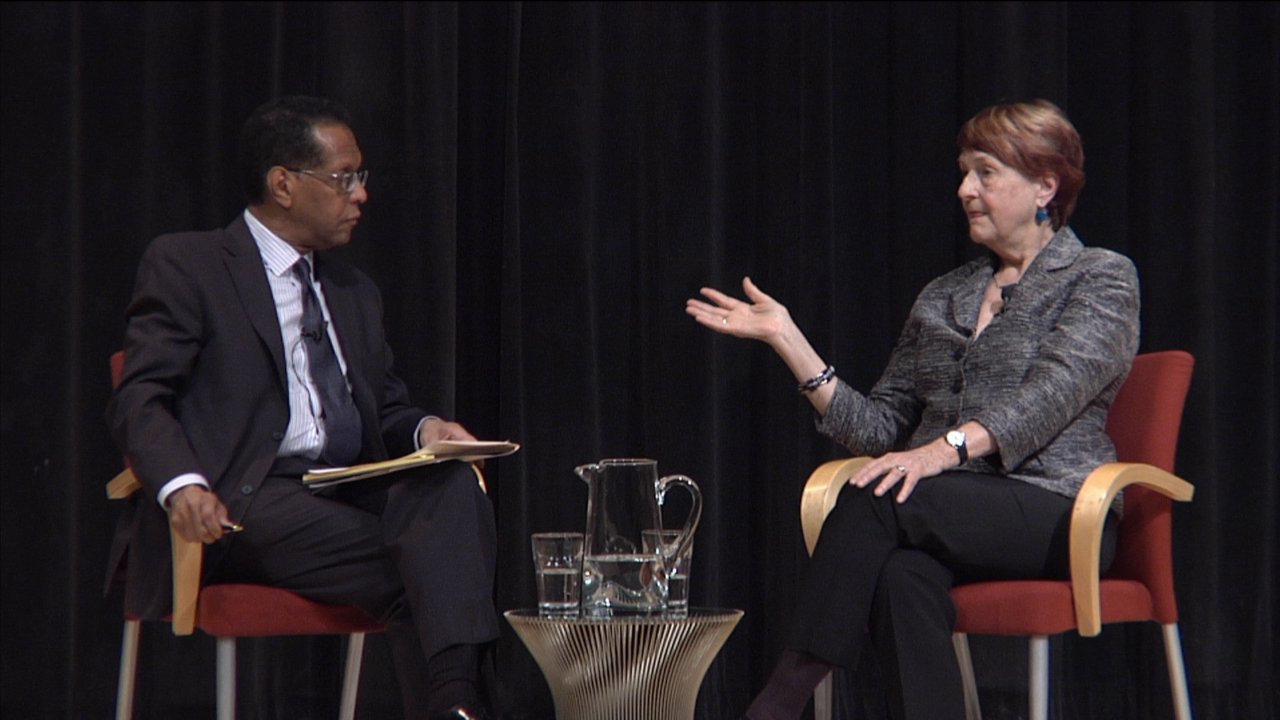
Bob Herbert and Dr. Helen Caldicott on Nov. 8 (The New School)
Renowned journalist Bob Herbert interviews Dr. Helen Caldicott at The New School in New York, November 2012.
Dr. Caldicott discusses her latest book, Loving This Planet (The New Press, Oct. 2012) which features 25 interviews from “If You Love This Planet,” as well as the state of the earth and U.S. presidential election (held two days before this interview). Among the topics covered are the urgency of addressing global Read the rest of this entry »
Posted in Uncategorized | Comments Off
December 21st, 2012
Listen Now Download the show by right-clicking the link.

Helen Caldicott, M.D. (nuclear-free.com)
This week, we hear a repeat of Dr. Caldicott’s March 31, 2011 lecture in Hanover, New Hampshire, three weeks after the Japan earthquake and tsunami that devastated the Fukushima nuclear power plant. She discusses the dangers of radioactive elements and the future of the planet. Note: Dr. Caldicott is convening a two-day international symposium on the medical and ecological effects of Fukushima on March 11 and 12, 2013 at the New York Academy of Medicine. The public is welcome. Details at nuclearfreeplanet.org. At the start of her lecture, Dr. Caldicott refers to the book Radioactive: Marie & Pierre Curie: A Tale of Love and Fallout. She also mentions her appearance on Democracy Now, debating George Monbiot, after Fukushima. Later in the talk, she refers to Read the rest of this entry »
Posted in Uncategorized | Comments Off
December 14th, 2012
Listen Now Download the show by right-clicking the link.
S. Banerjee (Jon Chase / Harvard News)
Subhankar Banerjee is an Indian-born American photographer, writer and activist. Over the past decade he has been a leading international voice on issues of arctic conservation, indigenous human rights and global warming, and over the past five years he has also been focusing on forest deaths from global warming. His photographs and writing have reached tens of millions of people around the world through exhibitions, publications and public lectures. His new book is called Arctic Voices: Resistance at the Tipping Point. At the start of this interview, Dr. Caldicott refers to a September 2012 report of a massacre of members of the Yanomami Indian Tribe of the Amazon. A week after this program was recorded, the report was found to be false, yet the general situation of native Read the rest of this entry »
Posted in Uncategorized | Comments Off
December 7th, 2012
Listen Now Download the show by right-clicking the link.

Marion Pack
In this conversation recorded in June, Dr. Caldicott talks with California anti-nuclear activist, Marion Pack. Pack is one of many members of the Orange County community who highlight serious safety issues with the San Onofre Nuclear Generating Station, located a few miles south of San Clemente, California. If San Onofre were to melt down, it would contaminate Los Angeles, San Diego, Orange County, and make large regions of southern California uninhabitable forever. As background, read Shut down San Onofre: The continuing nuclear threat to southern California and Bad Vibrations: San Onofre steam generators cannot safely be repaired – new Fairewinds video and report. Topics addressed in the interview include nuclear waste, the 1980s Nuclear Read the rest of this entry »
Posted in Uncategorized | Comments Off
November 30th, 2012
Listen Now Download the show by right-clicking the link.

Tom Engelhardt
This week’s guest is Tom Engelhardt, creator of the TomDispatch.com website, a project of the Nation Institute, a non-profit media center based in New York, where he is a fellow. Englehardt is the author of two collections of his TomDispatch columns: The United States of Fear and The American Way of War: How Bush’s Wars Became Obama’s, as well as The End of Victory Culture, a highly praised history of American triumphalism in the Cold War. Another of his recent books Terminator Planet: The First History of Drone Warfare 2001-2050, which he co-authored with Nick Turse. Note: This particular interview was recorded in summer 2012, before the November election. Topics discussed include the Read the rest of this entry »
Posted in Uncategorized | Comments Off
November 23rd, 2012
Listen Now Download the show by right-clicking the link.
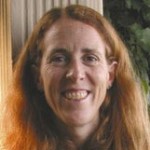
Holly Barker
This week’s guest is Holly Barker, author and teacher at the Anthropology Department at the University of Washington in Seattle. Barker worked for the Republic of the Marshall Islands Government’s Embassy in Washington D.C. for 17 years, helping conduct research in the Marshall Islands about the effects of nuclear testing from a Marshallese perspective. She was a Peace Corps Volunteer in the Marshall Islands from 1988-1990, and lived on a remote outer island with a Marshallese family for two years while teaching in a local elementary school. Barker is the author of Bravo for the Marshallese: Regaining Control in a Post-Nuclear, Post-Colonial World (which just came out in second edition), and co-authored with Dr. Barbara Rose Johnston an award-winning book called Consequential Damages of Nuclear War: The Rongelap Report. During the interview, Barker mentions the activism of Dr. Neal Palafox. Listen to Dr. Caldicott’s 2011 interview with Dr. Palafox. Dr. Caldicott recommends listeners watch the documentary film Nuclear Savage: The Islands of Secret Project 4.1
Posted in Uncategorized | Comments Off
November 16th, 2012
Listen Now Download the show by right-clicking the link.
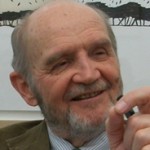
Brian D. Victoria
This week’s special guest is Brian Daizen Victoria, Professor of Japanese Studies and director of a program at Antioch University in Yellow Springs, Ohio titled: Japan and Its Buddhist Traditions. Apart from numerous journal articles, Victoria’s major writings include Zen at War; Zen War Stories; an autobiographical work in Japanese and a translation of The Zen Life by Sato Koji. In this discussion, Dr. Caldicott and Victoria look at the evolution of Buddhism in Japan including its role in Japan’s militarism in World War II, how individuals in societies can be gripped by tribalistic thinking or embrace a universalist point of view, death and dying, why men kill, and the moral choices we all face in a time when nuclear war still threatens everyone, and other profound questions. Victoria refers to the film Joyeux Noël [note: the website has a clickable English-language version].
Posted in Uncategorized | Comments Off
November 9th, 2012
Listen Now Download the show by right-clicking the link.
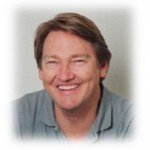
Jay Harman
This week’s guest is Jay Harman, entrepreneur and inventor. Harman has taken a hands-on approach to his lifelong fascination with natural fluid systems. In the process, he has grown companies that design innovative products, ranging from prize-winning watercraft called the WildThing and the Goggleboat, to a medical research company that developed a non-invasive technology for measuring blood glucose, to his latest company, PAX Scientific. Born and raised in Australia, Harman’s love of nature began as a boy swimming in the ocean near his home. He began his career as a naturalist with the Department of Fisheries and Wildlife, but he quickly demonstrated talents as an inventor. While still with the Australian government, Read the rest of this entry »
Posted in Uncategorized | Comments Off
November 2nd, 2012
Listen Now Download the show by right-clicking the link.
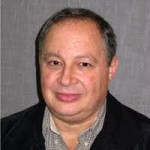
Wayne Getz
This week, Dr. Caldicott speaks with Professor Wayne Getz, and ecologist and population biologist with the Getz Lab at University of California at Berkeley. Students and postdoctoral students in the lab work on a broad range of theoretical and applied questions in population biology and behavior with application to problems in epidemiology and conservation and wildlife biology, particularly in Africa. This conversation was recorded in June, but has many important points relevant to Hurricane Sandy, which caused unprecedented destruction in the U.S. this week. Dr. Caldicott asks Getz to discuss the recent article the Getz Lab produced, Approaching a state shift in Earth’s biosphere.
Posted in Uncategorized | Comments Off
October 26th, 2012
Listen Now Download the show by right-clicking the link.
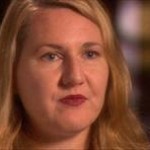
Donna Mulhearn
This week, Dr. Helen Caldicott speaks with Sydney-based peace activist Donna Mulhearn, an author, former journalist and political adviser. She was a human shield in the war in Iraq in 2003 and later returned to Iraq as a humanitarian aid worker. Mulhearn was part of an international team of volunteers that established a small NGO “Our Home - Iraq’ which set up a shelter for street kids in Baghdad, a center for traumatized children and provided emergency aid to displaced families. During this time she witnessed the massacre of Fallujah in April 2004, survived constant bombing, being kidnapped by fighters, and being shot at by American soldiers. In 2004- 2005, Mulhearn spent four months in the West Bank of Palestine as a volunteer with the International Solidarity Movement. During these years she continually wrote reports and reflections called pilgrim notes, which were distributed widely around Australia and the world. Listen to Dr. Caldicott’s June 2010 interview with Mulhearn.
Posted in Uncategorized | Comments Off
October 19th, 2012
Listen Now Download the show by right-clicking the link.
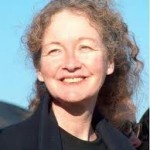
Kathy Kelly
This week’s guest is Kathy Kelly of Voices for Creative Nonviolence, an organization which has steadily researched consequences of drone attacks, night raids and aerial bombings in Afghanistan. Risking imprisonment, they frequently protest U.S. government plans to continue U.S. military presence in Afghanistan until 2024 and beyond. Drawing from recent experiences living for a month at a time in Afghanistan, Kelly frequently speaks and writes about perspectives of Afghan Peace Volunteers. They have told her and her companions their thoughts about prospects for their future in relation to NATO and the U.S. 21st Century military. Kelly previously lived alongside ordinary Iraqis whenever she and other Voices activists traveled there to break the U.S./UN economic sanctions against Iraq. They remained in Iraq throughout the Shock and Awe bombing in 2003 and during the initial months of U.S. occupation.
Posted in Uncategorized | Comments Off
October 12th, 2012
Listen Now Download the show by right-clicking the link.
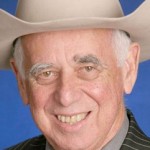
David Freeman
Dr. Caldicott’s guest this week is David Freeman, a senior advisor with Friends of the Earth’s nuclear campaign. Freeman has more than four decades of experience directing federal, regional and local energy policies. He was appointed chairman of the Tennessee Valley Authority by President Jimmy Carter in 1977, where he stopped the construction of eight large nuclear power plants and pioneered a massive energy conservation program. Subsequently, Freeman served for two decades as general manager of several large public power agencies including the Los Angeles Department of Water and Power, the New York Power Authority and the Sacramento Municipal Utility District. He is a renowned expert on clean energy, efficiency and the risks of nuclear power.
Posted in Uncategorized | 1 Comment »
October 5th, 2012
Listen Now Download the show by right-clicking the link.
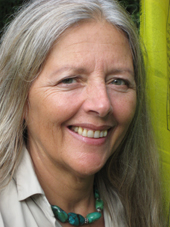
Norberg-Hodge
This week’s special guest on If You Love This Planet is Helena Norberg-Hodge, the founder and director of the International Society for Ecology and Culture, a non-profit organization whose mission is to promote systemic solutions to today’s social and environmental crises. Norberg-Hodge is a pioneer of the ‘new economy’ movement, and has been promoting an economics of personal, social and ecological well-being for more than 30 years. Trained in linguistics, she has given public lectures in seven languages, and has appeared on broadcast, print, and online media worldwide, including MSNBC, The London Times, The Sydney Morning Herald and The Guardian. Her groundbreaking work in Ladakh, or ‘Little Tibet’, earned her the Right Livelihood Award, or ‘Alternative Nobel Prize’ and her book, Ancient Futures, along with a film of the same title, has been translated into more than 40 languages. For more resources relevant to this interview, visit theeconomicsofhappiness.org.
Posted in Uncategorized | 1 Comment »
September 28th, 2012
Listen Now Download the show by right-clicking the link.
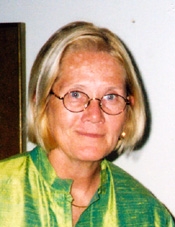
Col. Ann Wright
This week, we play a repeat of Dr. Caldicott’s 2011 interview with Ann Wright, a diplomat and retired U.S. Army colonel. Col. Wright is also a peace activist and co-author of Dissent: Voices of Conscience, published by Koa books in 2007. She holds a Master’s degree in Law, and a Master’s degree in National Security Affairs from the U.S. Naval War College. In 1987, Col. Wright joined the Foreign Service and served as U.S. Deputy Ambassador in Sierra Leone, Micronesia, Afghanistan, and Mongolia. She received the State Department’s Award for Heroism for her actions during the evacuation of 2,500 people from the civil war in Sierra Leone. Read the rest of this entry »
Posted in Uncategorized | Comments Off
September 21st, 2012
Listen Now Download the show by right-clicking the link.
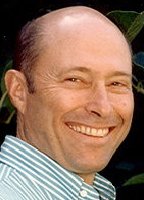
Chris Maser
This week, Dr. Caldicott talks to Chris Maser, author and international consultant in forest ecology and sustainable forestry practices. Trained primarily as a vertebrate zoologist, Maser has spent over 25 years as a research scientist in natural history and ecology, including positions as a research ecologist with the U.S. Department of the Interior, Bureau of Land Management for thirteen years from 1974 the last eight studying old-growth forests in western Oregon and a landscape ecologist with the Environmental Protection Agency for one year in 1990. Maser is the author of Resolving Environmental Conflicts and Decision-Making for a Sustainable Environment: Read the rest of this entry »
Posted in Uncategorized | 1 Comment »
September 14th, 2012
Listen Now Download the show by right-clicking the link.
Wertelecki
[This week’s guest is Wladimir Wertelecki, the founder and chairman of the Department of Medical Genetics and Birth Defects Center of the University of South Alabama, in the U.S. Prior to his training in Medical Genetics at Harvard University Medical School, Dr. Wertelecki trained in Pediatrics at St. Louis Children’s Hospital, Washington University. Later, he served as Senior Surgeon, U.S. Public Health Commission Corps at the Epidemiology Branch of the National Cancer Institute in Bethesda, Maryland. Dr. Wertelecki is a Diplomate of the American Board of Pediatrics and member of the Academy of Pediatrics, and since 1994, he has served as Secretary-Treasurer of the World Alliance for the Prevention of Birth Defects. He has extensively studied the effects of the radiation released by the Chernobyl Read the rest of this entry »
Posted in Uncategorized | 2 Comments »
September 7th, 2012
Listen Now Download the show by right-clicking the link.

Phil Caldicott
Dr. Caldicott talks to Australian sommelier, Phil Caldicott, about the science of wine production. Among the topics they discuss are the history of wine production; how wine quality is judged and best tasted; preservatives, pesticides and toxic chemicals used in wine and the benefits of organic wine growing; and the harmful and costly effects on public health of excess alcohol consumption, including how native peoples can be particularly vulnerable to these issues. For some relevant background, read the article Top 3 Reasons Why You Should Drink Organic Wine.
Posted in Uncategorized | Comments Off
August 31st, 2012
Listen Now Download the show by right-clicking the link.
Gundersen
This week, Dr. Caldicott brings on nuclear engineer Arnold Gundersen to update readers on the unfolding effects of the Fukushima meltdowns and what is happening with nuclear power in other parts of the world. As background, listen to earlier conversations with Gundersen (starting with April 1, 2011), which can be found on the Archives page.
Read the August 2012 news articles Study: Fukushima Nuclear Disaster Caused Mutant Butterflies and Grassroots Power Pushing Japan Towards Nuclear-Free Future . And visit Fairewinds.org, the website of Gundersen’s organization, for more information.
Posted in Uncategorized | 6 Comments »
August 24th, 2012
Listen Now Download the show by right-clicking the link.
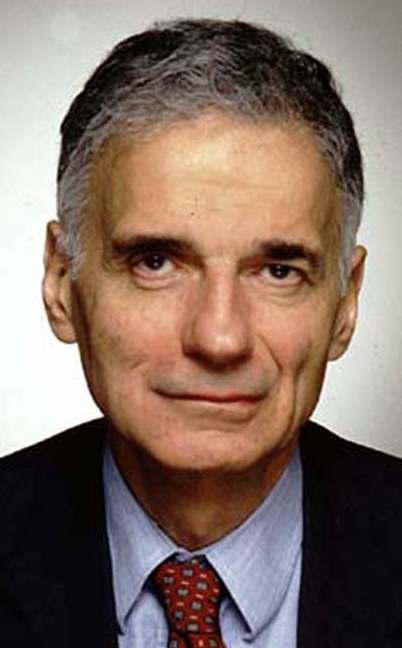
Ralph Nader
This week’s guest is author and lawyer Ralph Nader. (Note: this interview was recorded in April 2012.) A pioneer in the field of consumer advocacy, Nader is a a four-time U.S. Presidential candidate. He ran in 1996 and 2000 on the Green Party ticket. During a very close election in 2000, he was accused of taking votes away from democrat Al Gore. He ran again in 2004 and 2008 as an independent. Nader has helped pass several bills and written many books on the subject of consumer safety. The conversation covers the need for higher wages (Nader mentions timeforaraise.org), the weaknesses of the Occupy movement, the tenets of Nader’s book Only The Super-Rich Can Save Us and his forthcoming book 17 Solutions (fall 2012), nuclear weapons, the lack of free health care in the Read the rest of this entry »
Posted in Uncategorized | Comments Off
August 17th, 2012
Listen Now Download the show by right-clicking the link.
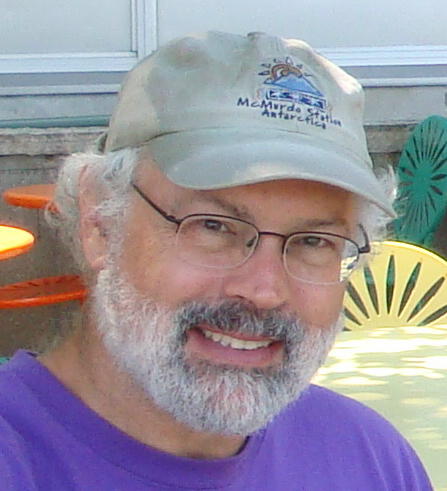
Dr. Alan Robock
This week, we hear a repeat of Dr. Caldicott’s September 2011 interview with Dr. Alan Robock, Ph.D., a Distinguished Professor of Climatology in the Department of Environmental Sciences at Rutgers University. Dr. Robock has published more than 300 articles on his research in the area of climate change, including more than 170 peer-reviewed papers. His areas of expertise include geoengineering, climatic effects of nuclear war, effects of volcanic eruptions on climate, regional atmosphere-hydrology modeling, and soil moisture variations. This week’s conversation looks at the latest models of nuclear winter after a nuclear war Read the rest of this entry »
Posted in Uncategorized | 2 Comments »
August 10th, 2012
Listen Now Download the show by right-clicking the link.

Dr. Brian Moench
This week’s guest is Dr. Brian Moench, President and Founder of the Utah Physicians for a Healthy Environment, and a member of the Union of Concerned Scientists. Dr. Moench is an anesthesiologist at LDS Hospital in Salt Lake City, Utah. He has taught at both Massachusetts General Hospital and Harvard Medical School. Dr. Moench has written over 60 op eds published in newspapers throughout the USA and on progressive online news sites such as Common Dreams, and received several local awards for activism in environmental and public health protection.
Dr. Caldicott and Dr. Moench cover such topics as global warming including the devastating fires in the West, as well as radiation exposure from nuclear Read the rest of this entry »
Posted in Uncategorized | Comments Off
August 3rd, 2012
Listen Now Download the show by right-clicking the link.
David Dufty
In this episode, Dr. Caldicott talks to David Dufty, author of How To Build an Android: The True Story of Philip K. Dick’s Robotic Resurrection, published in the U.S. by Holt in 2012. Dufty completed a psychology degree with honors at the University of Newcastle and earned a Ph.D., also in psychology, at the University of Sydney in 2002. He moved to the United States in 2003 where he was a post-doctoral fellow at the University of Tennessee. He now lives in Canberra, where he works for the Australian government. Among other issues, Dr. Caldicott and Dufty discuss reality vs. science-fiction, the disturbing aspects of robots and machines, police states, and artificial intelligence which could used by governments and the military. As background, read the 2012 New York Times article, Talking Head, about How to Build an Android.
Posted in Uncategorized | Comments Off
July 27th, 2012
Listen Now Download the show by right-clicking the link.
Arnie Gundersen
This week, Dr. Caldicott has a new conversation with nuclear engineer Arnold Gundersen about the ongoing nuclear disaster at the Fukushima plant and its effects on Japan and the rest of the world. Among the topics discussed are the little understood dangers of internal exposure to radiation. Read Dr. Caldicott’s 2011 article How nuclear apologists mislead the world over radiationin which she discusses internal emitters. Dr. Caldicott and Gundersen later discuss the new Japanese government report, The Fukushima Nuclear Accident Independent Investigation Commission Report. As background, watch or read the transcript of As Japan Says Fukushima Daiichi Disaster “Man-Made” & “Preventable,” Fears Grow for Nuclear Plants Worldwide, Gundersen’s appearance on Democracy Now earlier Read the rest of this entry »
Posted in Uncategorized | 1 Comment »
July 20th, 2012
Listen Now Download the show by right-clicking the link.
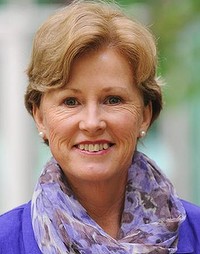
Christine Milne (Katherine Griffiths)
Dr. Caldicott talks to Christine Milne, leader of the Australian Greens Party and Senator for Tasmania. They discuss refugees, carbon taxes, green energy and other aspects of the climate crisis. Milne gives a history of Green parties around the world, saying that the first party started in Tasmania, and outlines the principles of the Green parties. She mentions the Global Greens Conference held this year in Dakar. Listen to
Dr. Caldicott’s interview with former Australian senator Bob Brown. The conversation then covers the need to aid war refugees and global warming refugees, following by a look at the need for carbon taxes on polluting companies. Dr. Caldicott mentions the report Carbon-Free and Nuclear-Free. Listen to one of
Dr. Caldicott’s interviews with report author Arjun Makhijani . Read the rest of this entry »
Posted in Uncategorized | Comments Off
July 13th, 2012
Listen Now Download the show by right-clicking the link.
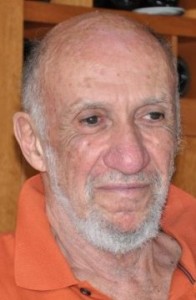
Prof. Falk
This week, Dr. Caldicott talks with Richard Falk, the Albert G. Milbank Professor of International Law Emeritus at Princeton University, where whe was a member of the faculty for forty years until 2001. Prof. Falk is currently Research Professor at the Santa Barbara campus of the University of California, where he directs a research project on Climate Change, Human Security, and Democracy. He served as Chair of the Board of the Nuclear Age Peace Foundation from 2004 to 2012, and in 2008-2009 he was appointed expert advisor to the President of the UN General Assembly. Prof. Falk has published more than 50 books, including his most recent (co-authored with David Krieger, an earlier guest on this program) published in 2012 titled Path to Zero: Dialogues on Nuclear Dangers. Relevant to this interview is the July 2012 article Iran Sanctions: War by Other Means.
Posted in Uncategorized | Comments Off
July 5th, 2012
Posted in Uncategorized | 1 Comment »
June 29th, 2012
Listen Now Download the show by right-clicking the link.

Robert Alvarez
This week, Dr. Caldicott interviews Robert Alvarez, a Senior Scholar at the Institute for Policy Studies (IPS) in Washington, D.C. Alvarez is an award-winning author and has published articles in prominent publications such as Science Magazine, the Bulletin of Atomic Scientists, Technology Review and The Washington Post. As background, listen to Dr. Caldicott’s November 2011 interview with Alvarez here. Read the May 2011 IPS press release Expert Cautions that 30 Million Spent Nuclear Fuel Rods Are Unsafely Stored in United States, Could Cause Fukushima-like Disaster and read the 2011 IPS report Spent Nuclear Fuel Pools in the U.S.: Reducing the Deadly Risks of Storage.
Posted in Uncategorized | 2 Comments »
June 22nd, 2012
Listen Now Download the show by right-clicking the link.
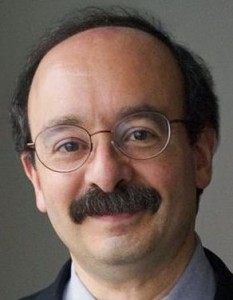
Amory Lovins
This week, Dr. Helen Caldicott talks about renewable energy with physicist Amory B. Lovins, cofounder, Chairman, and Chief Scientist of the Rocky Mountain Institute, an independent non-profit think-and-do tank that drives the efficient and restorative use of resources. An advisor to major firms and governments in over 50 countries for the past four decades, Lovins is author of 31 books including his latest, Reinventing Fire: Bold Business Solutions for the New Energy Era (2011), as well as over 450 papers. In 2009, Time Magazine named Lovins one of the world’s 100 most influential people. In this conversation, Lovins and Dr. Caldicott discuss the downsides of oil and coal, how America is reducing its coal use, cogeneration, Read the rest of this entry »
Posted in Uncategorized | Comments Off